


Sooner or later, many people reach a stage in life where knee pain starts to bother them.Walking becomes difficult and you feel a limp in your legs. This bothers you. Let it go.Over time, the pain intensifies and begins to follow the unfortunate person wherever he goes.Eventually, it becomes so intrusive that the person sees a doctor or seeks information about his problem on his own.
Usually in this case, the doctor will make a diagnosis of "deformative arthritis of the knee" based on the symptoms.Let's take a closer look at what it is, how it behaves, where it comes from, and where it leads.And, most importantly, how to get rid of it?
what is it?
This is the process by which cartilage tissue is destroyed.In this condition, an accompanying inflammation called synovitis often occurs.Later, the knee deforms and movement becomes painful or impossible.
Who will get sick?
This disease is diagnosed based on a number of symptoms.In general, they are very specific and characteristic of all types of diseases.
Before finding out what causes knee pain that bothers you regularly or continuously, let’s take a look at which categories of people are prone to this condition:
- Overweight people.It is logical that obesity and overweight would cause increased pressure on the legs while walking.As a result, the cartilage is destroyed because it cannot bear the load;
- athlete.The occurrence of this disease is related to athletes experiencing excessive stress during training;
- Varicose veins.In this case, the cause is a disruption of the blood supply and a reduced supply of nutrients;
- People with leg injuries.
Falling into one of these categories significantly increases the risk of knee joint disease.Now let’s get straight to its symptoms.
How to recognize disease?
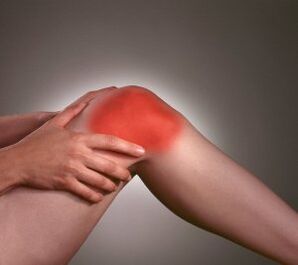
The development of this disease can last for a long time - for several years a person does not feel anything and does not suspect that he is beginning to suffer from a certain disease.Over time, symptoms can intensify and cause significant discomfort.
Its development has several stages:
- Grade 1 arthritis of the knee.It may be completely asymptomatic for long periods of time, or manifest as periodic mild pain and mild discomfort.This feeling is intensified when a person gets up in the morning and starts walking.This discomfort is more pronounced when a person goes up and down stairs.This degree can last several months or even years.If you see a doctor during this stage, recovery will be easier than waiting until the next stage.
- Knee arthritis 2 degrees.Patients begin to notice a characteristic crunching sound when walking, sometimes accompanied by severe pain.Movements become limited, restricted, as if difficult.During this phase of the examination, the doctor may notice slight deformation and the beginnings of fluid accumulation.This phase involves medication and regular therapeutic exercises.
- Third degree knee arthritis.During this period, severe deformation can be seen and movement becomes very difficult.The patient has difficulty bending and straightening his legs.The pain is constant and worsens with changing weather conditions.The typical gait occurs with a half-bent leg, a wobbly appearance, and a bent X- or O-shape of the leg.
Treatment depends on the extent of symptoms, stage of development, and becomes more complex as the condition progresses.
Why did he show up?
There are many causes of knee injuries, and they directly depend on the form of the disease - primary or secondary.
The primary form is due to congenital causes; it begins to appear at an early age.Due to lesions in the development of the ligaments, too much stress is placed on them when walking.This leads to the development of the disease.Thanks to timely medical intervention and adherence to a certain diet, the main form of knee injuries will be eliminated.
Minor forms are the result of injury and illness.
Let's consider all the causes of this disease:
- Rheumatic diseases (rheumatism, arthritis) may be the underlying cause.As arthritis progresses, fluid accumulates, causing an inflammatory process that contributes to the progression of the disease;
- Excess weight can also increase the load on the cartilage layer, leading to its premature destruction;
- Metabolic disorders lead to salt deposition in the joint cavity and difficulty in blood circulation;
- Chronic spasm of leg muscles or blood vessels;
- surgical intervention;
- Excessive pressure on the legs during physical activity;
- Injuries: dislocations, fractures, contusions, with damage to the cartilage layer and ligaments.
When treating deforming arthropathy of the knee, one of the main actions is to eliminate the cause of the disease.Only after eliminating the cause can we talk about the possibility of curing the disease itself using different means, techniques and the right diet.
How to treat it?
How to treat knee joint disease can only be decided by an expert, focusing on the stage of development of the disease, the severity of the cartilage damage, and determining the exact cause of the disease.There are many methods, types, and methods of treatment, and they are often only effective when used in combination.Therefore, you need to handle this issue responsibly and follow all your doctor's recommendations carefully.
It should be remembered that this is a chronic disease that can rarely be completely cured, so any treatment is first aimed at achieving relief and disappearance of symptoms.However, in the first stages of development, when the problem has just begun, a knee injury can be completely relieved by eliminating its cause (such as excess weight or stress) and performing simple physical therapy.
In most cases, treatment comes down to relieving the patient's pain, restoring damaged cartilage, and restoring the possibility of full activity.
This therapy combines the following methods:
- Medications and use of medicines and ointments;
- Provide therapeutic massage and manual therapy;
- Physiotherapy methods: therapeutic exercises, exercise therapy;
- Surgical intervention when necessary;
- Folk and non-traditional healing methods.
How to use and what medicine to use?
The primary goal of drug therapy is pain relief.For effective pain relief, use nonsteroidal anti-inflammatory drugs.
These medications do not cure the disease or stop its progression—they are only intended to relieve pain.Their use should be combined with drugs (symptomatic, slow-acting drugs) and ointments that restore the function of damaged cartilage in the knee joint.They have many side effects - mainly negative effects on mucous membranes.Only a doctor can prescribe the dosage and frequency of taking medication.Don't try to be kind to yourself - this will inevitably lead to a negative course.
It has also been observed that large doses of anti-inflammatory nonsteroidal drugs have a destructive effect on cartilage.
Only when nonsteroidal drugs no longer work do doctors prescribe strong analgesics with central action.
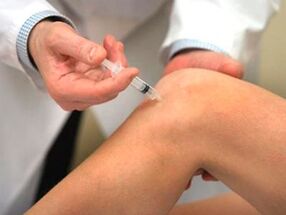
In addition to analgesics, gymnastics and massage, the following group of drugs is used - corticosteroids, the purpose of which is to relieve the inflammatory process.These are hormonal drugs and their effects are very strong, so oral administration is not recommended.In addition, their use can lead to many side effects.More recently, some corticosteroids have been given to the affected area by injection.
The next group of drugs—symptomatic delayed action—stimulates the synthesis of healthy cartilage cells (cartilage cells) that replace damaged ones.The active substances that make up these drugs are similar in many ways to those that make up cartilage tissue, and when they get inside, they prevent destruction and stimulate cell reproduction.
Before taking such drugs, always consult a specialist: the fact is that these drugs are effective only in the first and second degree of the disease.By the third degree, the cartilage has been completely destroyed and there is nothing left to restore.
What non-pharmacological methods are used?
A combination of exercise therapy and physical therapy is most effective when treating knee arthritis.Physical therapy exercises should only be performed under expert supervision.Physical activity should be moderate, measured and regular.
While exercising, it is useful to undergo physical therapy procedures such as ultrasound, high-frequency magnetic therapy, radon, hydrogen sulfide baths, and laser therapy.All of these surgeries not only reduce knee damage but also enhance physical fitness.
It must be remembered that exercise therapy sessions are possible only in the first degree or in remission of the disease - that is, only when obvious manifestations (inflammation, pain) are absent or almost absent.If your physical condition does not allow it, it is best to refuse to exercise.
Before starting therapeutic exercises, consult a physical therapy trainer who will develop a personal exercise program for you after examination and show you the entire complex process to be performed until recovery.
Practice must be carried out strictly according to the schedule and strictly according to the load determined by the coach for you.Missing class will invalidate the program, so please follow all instructions regularly and responsibly.Only then can we hope to achieve truly positive results.
The exercises should be combined with and done with manual therapy (massage), either by a specialist or by yourself after you have learned how to do it.Massage relaxes muscles and improves blood supply to the cartilage layer.
What are the auxiliary methods?
Many doctors recommend the use of special knee braces.They can improve the effectiveness of treatment and reduce pain.Elastic bandages are also used for the same purpose.
The knee brace immobilizes the ligaments and partially resists the deformation process.This makes it easier for patients in the second stage of the disease, for whom walking is already a problem.
People who are under physical stress, people who are overweight can use knee braces as a preventive measure to reduce the traumatic effects of walking, and athletes can also use knee braces as a preventive measure during training.
When choosing knee braces, it’s best to consult your doctor.Knee braces come in different levels of retention: tight, medium, or light.Use tight ones in the most advanced stages of the disease and light ones in the first stages.When using it, it is necessary to ensure that the legs are not numb: numbness means blood stasis, which can have disastrous consequences.
The thermal effect of knee braces can relieve pain, thereby reducing the dosage of painkillers.There are kneepads made of camel hair and dog hair.Wool itself has beneficial effects, so if it does not cure the disease, it at least relieves it and speeds up the treatment process.
Is it worth using folk remedies?
Folk remedies for knee arthritis should only be used after consulting a doctor and only as an adjunct.By itself, using traditional methods without traditional medicine is ineffective and dangerous and can lead to negative consequences.
In folk remedies for the treatment of knee joint disease, various rubs, compresses, ointments of natural ingredients, friction, herbal preparations and infusions are used to relieve pain and relieve the inflammatory process.Our ancestors used many different formulas to prepare therapeutic remedies.Their therapeutic benefits have been proven by centuries of use beyond doubt.Burdock compresses, cranberry juice rubs, mummies and beeswax are just some of the many folk remedies.
Recently, leech therapy (leech therapy) has become increasingly popular.Leech therapy can relieve inflammation and act as a powerful pain reliever.
As you know, leeches can increase blood circulation in the treated area.Increased blood supply to the sore area significantly speeds up the regeneration of cartilage tissue and cleansing of affected cells, and provides more nutrients to the sore area.
Therefore, the use of folk remedies and leech therapy as well as medications, manual and physical therapies, and therapeutic exercises can promote complete recovery.